



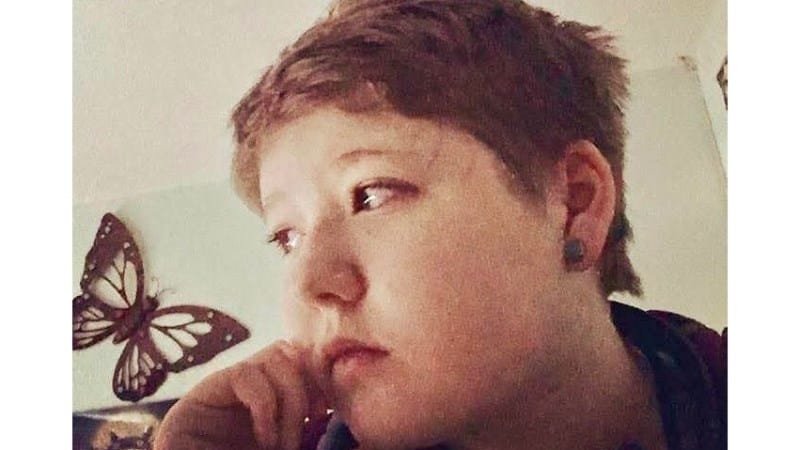
A fresh inquest will be held into the death of 20-year-old trans man Aiden Longmuir, after the first inquest was quashed following a legal challenge brought by his family.
Aiden died by suicide in May 2025. An inquest was held in October 2025 and Aiden’s family raised serious concerns about the circumstances leading to his death, including the lack of gender-affirming care he had received.
Aiden’s family was supported in their legal challenge by the Good Law Project and represented by law firm Leigh Day.
Aiden had been diagnosed with gender dysphoria in 2018 and had been on the waiting list for the Tavistock Gender Identity Clinic since 2021 without receiving any support.
The original inquest into Aiden’s death was listed as a documentary inquest, meaning no oral evidence was heard. The coroner ruled that many of the family’s concerns – including delays in accessing gender identity services, the lack of support from his GP, and failures by his local Trust in providing mental health care – were outside the scope of the inquest.
The coroner also recorded Aiden’s sex as “female” on the record of inquest and death certificate, rather than his lived gender of “male”. She said she was required to make this finding of fact following the Supreme Court’s decision in For Women Scotland. In their legal challenge, Aiden’s family argued this was legally incorrect and went against the Chief Coroner’s Guidance, which states:
“It is the Chief Coroner’s view that the law does not prevent a trans person’s death being registered in the deceased’s experienced or acquired gender (whether the person has or has not got a GRC [gender recognition certificate]).”
Aiden’s family argued that the coroner's misinterpretation of the law, combined with the refusal to adjourn the inquest and the failure to hold a pre-inquest review hearing, meant the inquest was unlawful. Aiden’s family also raised concerns about breaches of Article 8 of the European Convention on Human Rights, which protects the right to private and family life - and covers the dignity and identity of trans people, and the need to treat someone’s death with respect for the feelings of their family.
Following the family’s pre‑action letter, the Assistant Coroner for Surrey accepted that several key decisions in the inquest into Aiden’s death were unlawful and agreed that the inquest should be quashed. On 3 March 2026, the High Court approved a consent order confirming that: The original inquest is formally quashed; a pre‑inquest review hearing must take place within 12 weeks of the order; a new inquest must be held within six months, subject to witness availability; all matters required by s.5 of the Coroners and Justice Act 2009 will be considered afresh, including the gender recorded on Aiden’s death certificate.
Aiden’s family are supported by the Good Law Project and are represented by Leigh Day solicitors Kate Egerton and Ellie Fawcett, and Jude Bunting KC of Doughty Street Chambers and Rosalind Comyn of Matrix Chambers.
Aiden’s mother, Willow, said: “No family should have to experience the trauma and indignity that we have been through. We feel we have been deeply let down by the coronial process where matters we consider essential to understanding why Aiden is no longer with us were ignored.
:All we wanted was for Aiden to be treated with respect and for the circumstances of his death to be properly investigated. We hope that this can finally happen with a fresh inquest.”
Jo Maugham, Director and Founder at Good Law Project, said: "A system that failed Aiden in life then failed him again in death. I have to say, this feels to me like a quite shockingly callous decision by the Coroner and I am pleased it will not stand,"
Kate Egerton, solicitor at Leigh Day, added: “This case highlights the importance of dignity and respect for trans individuals and ensuring that bereaved families are given a fair opportunity to participate in the inquest process. We welcome the decision to hold a new inquest and sincerely hope that Aiden’s family will finally be heard.”
Scene was founded in Brighton in 1993, at a time when news stories about Pride protests were considered radical.
Since then, Scene has remained proudly independent, building a platform for queer voices. Every subscription helps us to report on the stories that matter to LGBTQ+ people across the UK and beyond.
Your support funds our journalists and contributes to Pride Community Foundation’s grant-making and policy work.



Member discussion